Have you ever wondered why some teams thrive in chaos while others collapse under the slightest pressure?
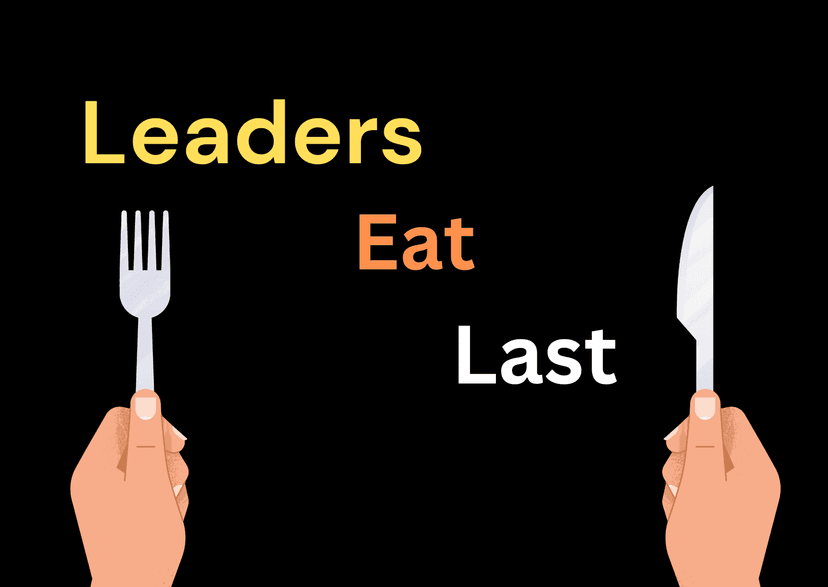
In his acclaimed book, Leaders Eat Last, Simon Sinek explores the deep-seated biological and evolutionary roots of human trust and cooperation. The title of the book originates from a simple yet profound tradition in the United States Marine Corps: during meal times, the most junior Marines are served first, while the senior officers take their place at the back of the line.
This isn't a rule written in a manual; it is a physical manifestation of a core leadership philosophy. True leaders willingly sacrifice their own comfort—and even their own survival—for the good of those in their care. When employees feel that their leader genuinely has their back, they will give their blood, sweat, and tears to advance the organization's vision.
The Circle of Safety
To understand modern workplace dynamics, Sinek takes us back to the Paleolithic era. Early humans lived in a dangerous world filled with predators, harsh weather, and rival tribes. To survive, they formed tribes. Inside the tribe, they felt secure; outside the tribe meant certain death.
This evolutionary need for belonging hasn't changed. In the modern corporate world, the "predators" are different—economic downturns, disruptive technologies, and aggressive competitors. Sinek introduces the concept of the Circle of Safety. When a leader creates a strong Circle of Safety, employees are protected from internal threats (like office politics, backstabbing, and toxic managers).
When people no longer have to waste energy protecting themselves from each other, they naturally combine their talents to protect the organization from the outside world. Conversely, when the Circle of Safety is broken, employees adopt a survival-of-the-fittest mentality, ultimately destroying the company from the inside out.
The Biology of Leadership
Sinek argues that leadership is not a modern psychological concept; it is an ancient biological one. Our behavior is driven by four primary neurochemicals, which Sinek splits into two categories: "Selfish" chemicals and "Selfless" chemicals.
EndorphinsSelfish
The Pain Masker. Endorphins are designed to mask physical pain with pleasure, commonly known as a "runner's high." In our hunter-gatherer days, they allowed us to push through exhaustion to track down prey. In the modern world, endorphins help us power through an all-nighter to finish a massive project.
DopamineSelfish
The Goal Achiever. This is the feeling of satisfaction when you cross a task off your to-do list, hit a sales target, or get a notification on your phone. It is highly addictive. While dopamine drives progress, highly toxic organizations often rely solely on dopamine (bonuses, quotas) to drive performance, creating cutthroat environments.
SerotoninSelfless
The Leadership Chemical. Serotonin provides the feeling of pride and status. It is the feeling a child gets when their parent says, "I'm proud of you," and the feeling the parent gets watching the child succeed. It bonds the leader and the follower. Serotonin is why we have award ceremonies and public recognition—it solidifies social hierarchies and mutual respect.
OxytocinSelfless
The Trust Chemical. This is the feeling of friendship, love, and deep trust. Unlike dopamine, which is instant, oxytocin takes time to build. It requires physical presence, shared vulnerability, and acts of human generosity. Oxytocin is what makes us feel safe enough to take risks and admit mistakes to our team.
The Villain: Cortisol
If oxytocin is the hero of great organizations, cortisol is the villain. Cortisol is the feeling of stress and anxiety. It is the chemical alarm system designed to keep us alive when we spot a threat.
Biologically, cortisol inhibits oxytocin. You cannot feel trust and empathy when you feel threatened. In a toxic work environment where employees are afraid of being fired or humiliated, cortisol constantly floods their systems. This not only destroys teamwork but literally destroys their health, leading to weakened immune systems, heart disease, and burnout.
"Leadership is not a license to do less; it is a responsibility to do more. And that's the trouble. Leadership takes work. It takes time and energy."
Empathy in Action: The Bob Chapman Story
Sinek anchors his biological theories in the real world through leaders like Bob Chapman, CEO of Barry-Wehmiller. During the 2008 financial crisis, the company lost 30% of its orders overnight. The board advised Chapman to lay off employees to save money.
Chapman refused, stating, "We do not sacrifice our people for the numbers. We sacrifice the numbers for our people." Instead of layoffs, he instituted a mandatory four-week unpaid furlough for every single employee, from the CEO to the factory floor. He framed it powerfully: "It is better that we all suffer a little so that none of us has to suffer a lot."
The result? Morale skyrocketed. Employees started trading furlough days—those who could afford the time off traded with those who couldn't. The company emerged from the recession stronger than ever because the Circle of Safety remained intact.
The Bottom Line
Leaders Eat Last is a powerful reminder that human beings are not resources to be managed; they are individuals to be protected. Being a leader has nothing to do with your rank, your title, or your corner office. It has everything to do with whether you are willing to take care of the person to the left of you and the person to the right of you. When you do, they will move mountains for you.