The Story
Long ago, there lived a king named Midas. His palace was wide and beautiful, his rooms were filled with fine things, and his servants brought him everything he needed. But Midas was not peaceful in his heart. Whenever he saw gold, his eyes brightened. Whenever he counted his coins, he wished the pile would grow higher. He had enough for a happy life, but enough never felt enough to him.
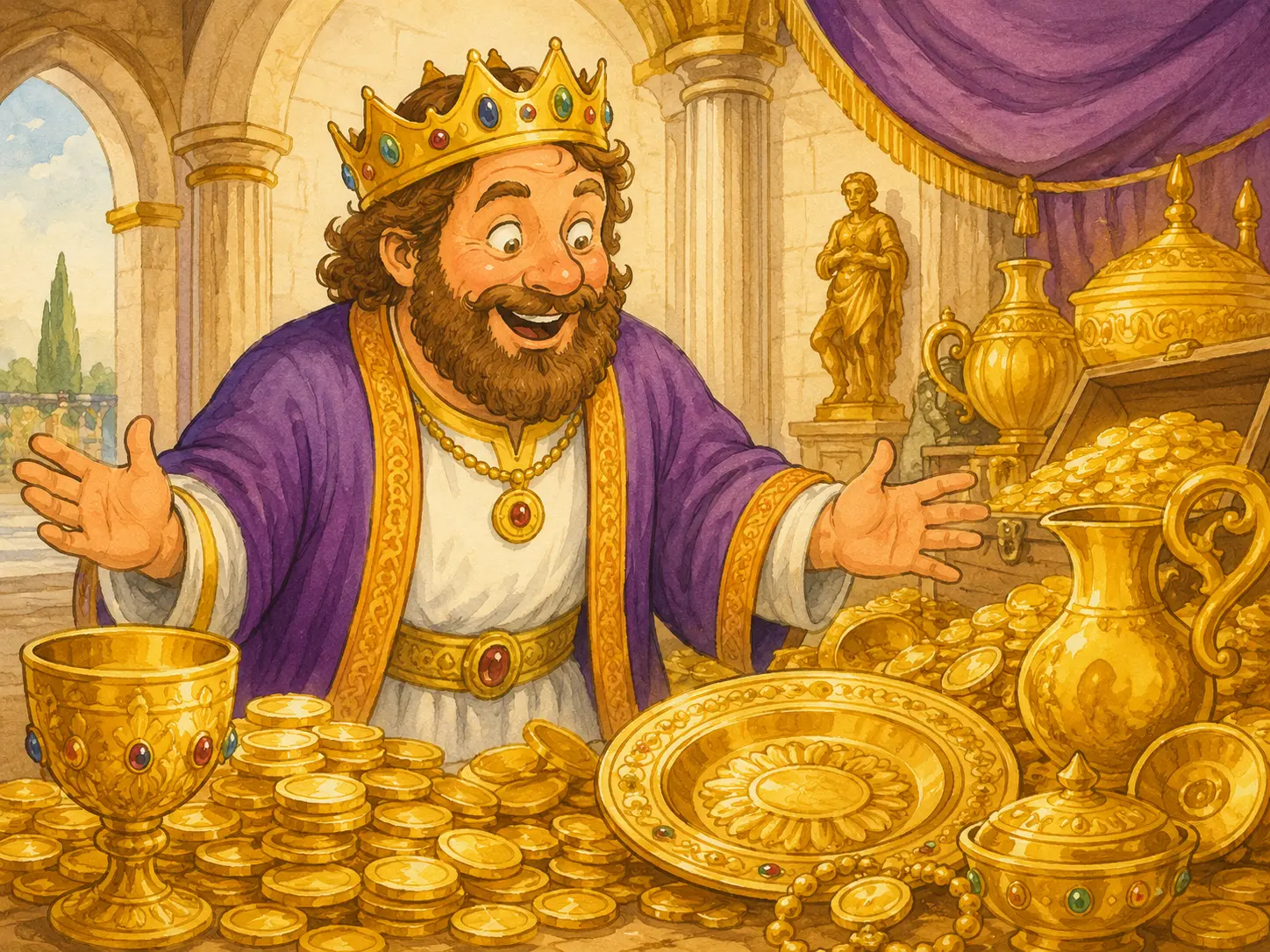
Every morning, Midas walked through his treasure room and touched the gold cups, gold plates, gold ornaments, and gold coins kept there. The cold shine of the metal pleased him more than music, gardens, or friendly words. He would stand before his treasure and whisper to himself that a man with more gold must surely be the happiest man in the world.
One day, a strange visitor came to the palace. The visitor had a quiet face and a voice that seemed to carry some hidden power. Midas welcomed him kindly, and before leaving, the visitor offered the king a reward. Midas could ask for one special gift. He did not pause to think about food, health, friendship, or wisdom. His old desire rose at once, and he asked that everything he touched should turn into gold.
The visitor looked at him carefully and asked if he was certain. Midas nodded eagerly. To him, the gift sounded perfect. If every chair, wall, flower, and cup became gold, he thought, no king on earth would be richer than he was. The visitor granted the wish, and Midas went to sleep that night dreaming of a palace brighter than the sun.

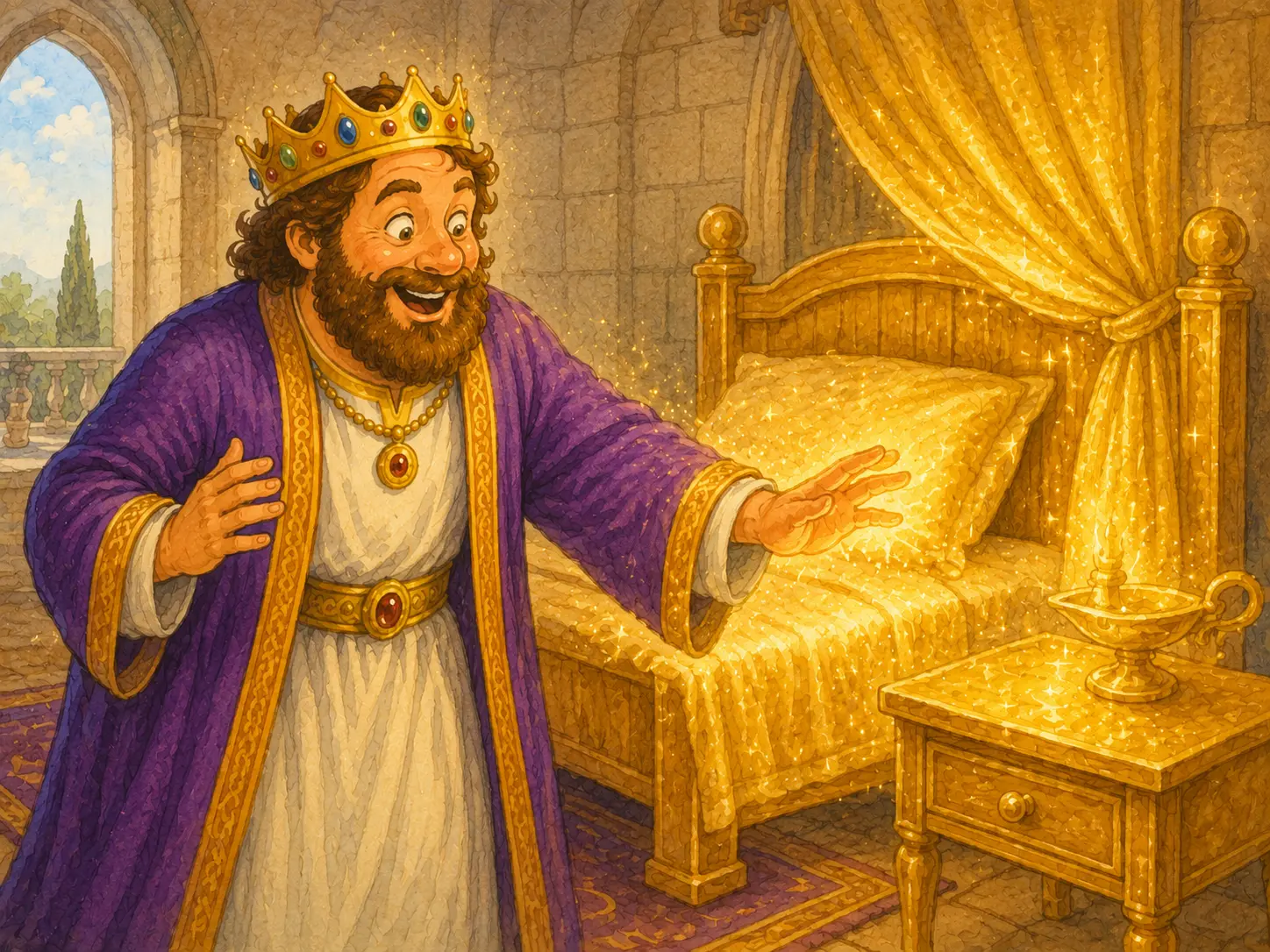
When morning came, Midas stretched out his hand and touched the side of his bed. At once, the plain wood changed into shining gold. He gasped with joy. He touched a curtain, and it became gold. He touched a small table, and it became gold too. Laughing like a child, he hurried through the palace, turning ordinary things into treasure with the lightest brush of his fingers.
In the garden, he bent down and touched a rose. Its soft petals hardened instantly, and the living flower became a golden ornament. Midas admired it for a moment, but the garden felt strangely silent. The rose no longer had fragrance. It no longer bent in the breeze. Still, the king pushed the thought away. Gold was gold, he told himself, and gold was better than anything else.
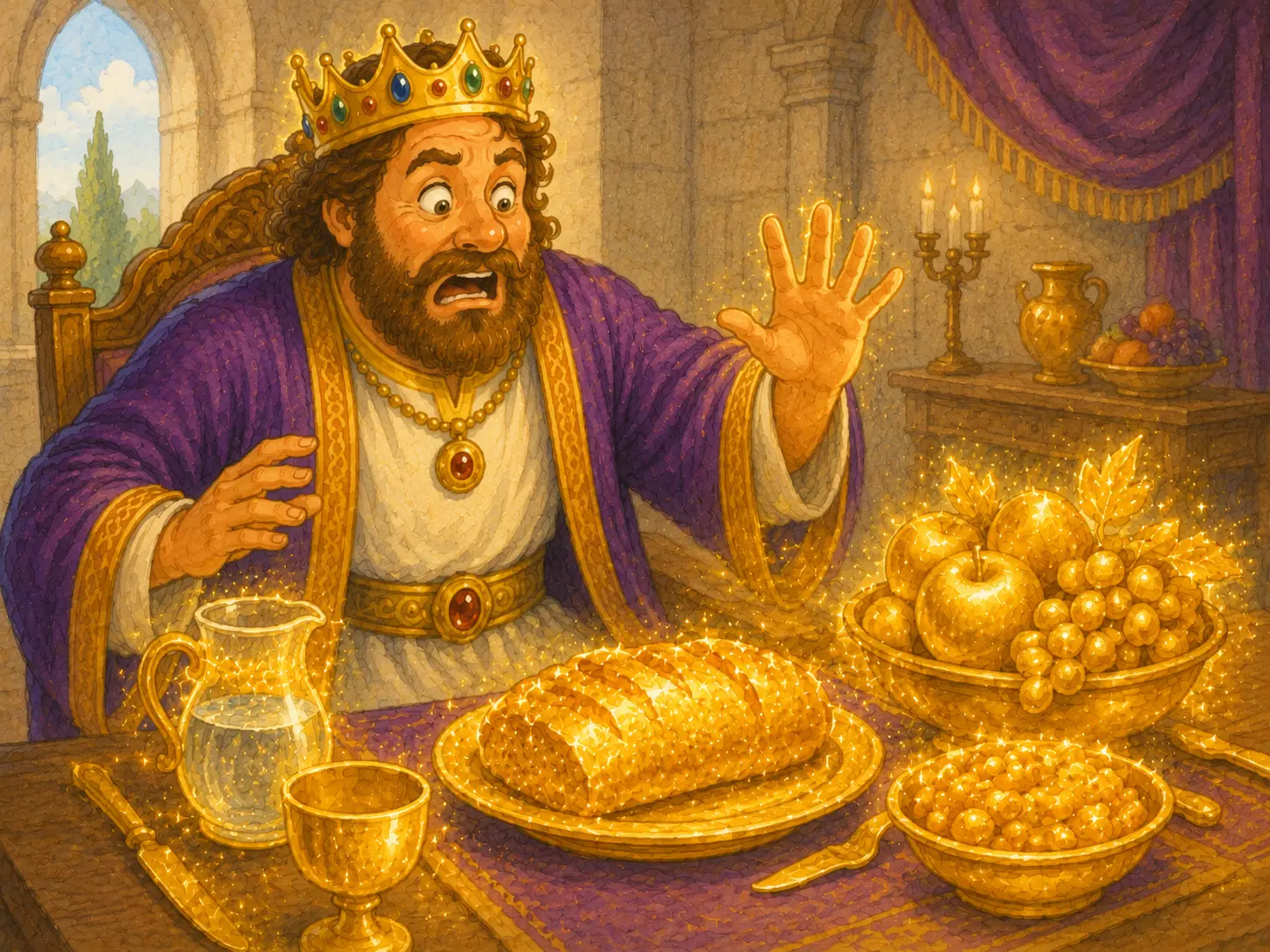
Soon Midas felt hungry. He sat at the dining table, pleased with himself and ready for a grand breakfast. But when he lifted a piece of bread, it turned into a hard lump of gold. When he touched a cup of water, the water became a golden block inside the cup. He tried fruit, but the fruit changed before it reached his mouth. The gift that had seemed wonderful now stood between him and the simplest needs of life.
The king stared at the golden food with fear rising in his chest. All his treasure could not feed him. All his shining cups could not give him one mouthful of water. He looked around the room and saw gold everywhere, but the sight no longer made him happy. The palace felt cold, and the glitter that once delighted him now seemed cruel.
Midas began to understand what he had asked for. He had wanted the whole world to become treasure, but a world made only of treasure could not be lived in. A flower was better when it was alive. Bread was better when it could be eaten. Water was better when it could be drunk. The ordinary things he had ignored were suddenly more precious than all his gold.
With a trembling heart, Midas begged to be freed from the golden touch. He no longer wanted to be the richest king. He wanted to hold food without ruining it, drink water without losing it, and walk through his garden without turning life into metal. His wish had taught him what his greed would not let him see.
At last, the golden touch was taken away. Midas returned to his palace quieter than before. He looked at his treasure room, but he did not feel the same hunger for gold. He spent more time in the garden, listened more kindly to the people around him, and learned to enjoy the simple gifts that had always been near him.
From that day on, King Midas remembered the morning when his dream became a burden. Gold still shone in his palace, but it no longer ruled his heart. He had learned, through fear and regret, that a rich life is not made by turning everything into gold. It is made by knowing the value of what is already alive, useful, and loved.